
Key takeaways
- A custom Morocco itinerary lets you control pacing, overnight stops and the mix of cities, mountains and desert instead of following a rigid group schedule.
- Marrakech, Fes, Chefchaouen and the Sahara each need different amounts of time, and the long drives between them are the main factor that shapes any realistic plan.
- Build in at least one rest day per week and treat long transfer days as part of the experience, not lost time.
- A private driver who knows the routes can adjust stops, timing and detours on the fly, which fixed packages cannot do.
- Seven days suits a first focused trip, ten days adds the full desert loop, and fourteen days lets you reach the north without rushing.
Start with your pace, not your map. A custom Morocco itinerary works best when you decide how many hours a day you want to spend in a vehicle, then fit Marrakech, Fes, Chefchaouen and the Sahara around that limit. Morocco is larger than it looks on a screen, and the distances between its headline destinations are long, so the real planning skill is sequencing cities, mountains and desert in an order that keeps driving days reasonable and leaves room to actually enjoy where you are.
This guide walks through why a tailored plan beats a fixed package, which destinations to combine, how to balance travel and rest, and sample frameworks for 7, 10 and 14 days.
Why a Custom Morocco Itinerary Beats a Fixed Package
A fixed group package locks you into someone else's schedule: the same hotels, the same stops, the same thirty minutes at each viewpoint whether you want five minutes or two hours. A custom Morocco itinerary flips that. You choose the overnight towns, the departure times, and how long you linger at a tannery, a kasbah or a desert camp.
Morocco rewards this flexibility because its draws are so different from one another. A morning in the Marrakech medina and an afternoon in the Atlas Mountains ask for completely different energy, and travelers vary in how much of each they want. Pacing is personal. Some people want three nights in one riad and daily excursions out; others want to move every night. Only a plan built around your own preferences can match that.
Interest in independent, flexible travel has grown alongside Morocco's overall tourism boom. The country received 11.6 million tourists by the end of July 2025, a 16 percent increase against the same period a year earlier, according to Morocco's government tourism figures. Busier sites mean timing matters more than ever, and a custom plan lets you visit popular spots early or late to avoid the thickest crowds.
Key Destinations to Weave Together
Four places anchor most Morocco trips, and each plays a distinct role in a good itinerary.
Marrakech
Marrakech is the usual entry point and a sensory introduction to the country: the Jemaa el-Fna square, the souks, the Majorelle Garden and the Koutoubia Mosque. It also functions as the main launch pad for the Atlas Mountains and the southern desert route, which is why most itineraries open here.
Fes
Fes holds the oldest and largest living medieval medina in the country and feels less polished and more traditional than Marrakech. Its tangle of lanes, the leather tanneries and the historic madrasas reward a full day or more. Fes is also the natural hinge point for reaching the north.
Chefchaouen
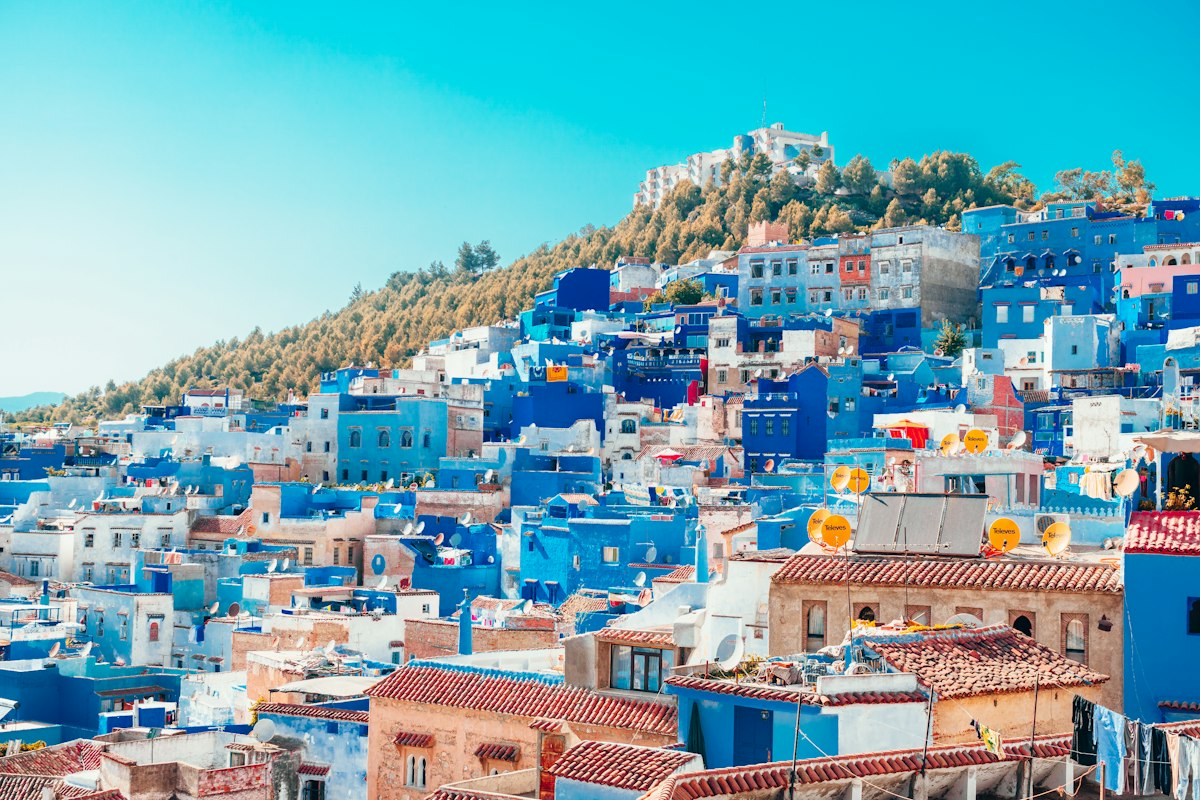
Chefchaouen, the blue-washed town in the Rif Mountains, is the slowest and most relaxed stop on this list. It sits a few hours north of Fes, so it usually earns a place only on longer trips. The payoff is a calm, photogenic mountain town that contrasts sharply with the big-city intensity of Marrakech and Fes.
The Sahara
The desert near Merzouga, with the Erg Chebbi dunes, is the emotional high point for many travelers: camel treks, a night in a desert camp and some of the clearest night skies you will ever see. Reaching it is a journey in itself, typically a multi-day loop from Marrakech through the Tizi n'Tichka pass, Ait Ben Haddou and the Dades and Todra gorges.
Morocco also has nine sites on the UNESCO World Heritage List, including the medinas of Fes and Marrakech and the ksar of Ait Ben Haddou, so several of these anchors double as world heritage visits.
How to Balance Travel Days, Rest Days and Must-See Sights
The most common mistake is stacking long drives back to back and arriving everywhere exhausted. Morocco's distances are real: Marrakech to Fes is roughly a full day on the road, and the Sahara sits two to three days away from Marrakech by the scenic southern route. Treat every transfer of four hours or more as its own day, not a quick hop before sightseeing.
A workable rhythm looks like this:
- Alternate heavy and light days. Follow a long transfer day with a day that stays in one place.
- Build in one rest day per week. On a ten-day trip, plan at least one morning with nothing scheduled.
- Turn drives into experiences. The southern route to the desert is lined with gorges, kasbahs and mountain passes, so the journey earns its hours when you plan stops along the way.
- Prioritize ruthlessly. Pick two or three must-see sights per city rather than trying to tick off everything.
Rest days earn their place. They let you absorb the previous stop and arrive at the next one ready to explore instead of recovering.
Working With Local Drivers to Personalize Routes and Stops
A private local driver is the single change that makes a custom itinerary feel effortless. Morocco's intercity routes include long rural stretches, winding mountain roads and medinas where driving and parking are genuinely difficult. Handing that to a driver who knows the roads frees you to watch the landscape instead of the GPS.
The deeper value is adaptability. A good driver can add an unplanned stop at a viewpoint, shift a departure earlier to beat the heat, suggest a quieter lunch spot, or rework the afternoon when a site is unexpectedly crowded. That kind of in-the-moment flexibility is exactly what a fixed coach tour cannot offer.
This is where a specialist operator earns its place. Morocco View Travel builds private, customized guided tours with local drivers and comfortable vehicles, which means the route, the pace and the stops are shaped around you rather than a fixed departure board. Describe the trip you want, and the itinerary and driving plan are assembled to match.
Sample Custom Itinerary Frameworks
Use these as starting points, then stretch or compress each leg to fit your interests. They assume a private vehicle and driver.
7 Days: Marrakech, Atlas and Desert Taster
A focused first trip that keeps driving manageable.
- Day 1: Arrive Marrakech, settle in, explore the medina.
- Day 2: Full day in Marrakech: souks, gardens, Koutoubia.
- Day 3: Drive south over the Tizi n'Tichka pass, stop at Ait Ben Haddou, overnight near the Dades or Todra gorge.
- Day 4: Continue to Merzouga, afternoon camel trek, night in a desert camp.
- Day 5: Sunrise in the dunes, drive back toward the mountains.
- Day 6: Return to Marrakech with stops along the route, rest evening.
- Day 7: Departure.
10 Days: Full Southern Loop and an Imperial City
Adds Fes and a complete desert circuit without backtracking.
- Days 1 to 2: Marrakech.
- Day 3: Drive to the gorges via Ait Ben Haddou.
- Day 4: Reach Merzouga, desert camp overnight.
- Day 5: Dunes at sunrise, drive north toward Fes.
- Days 6 to 7: Fes, with a full day in the medina and a rest afternoon.
- Day 8: Day trip to Volubilis and Meknes, or a free day in Fes.
- Day 9: Travel back toward Marrakech or Casablanca depending on your flight.
- Day 10: Departure.
14 Days: Cities, Desert and the Blue North
Enough time to reach Chefchaouen and slow the whole trip down.
- Days 1 to 3: Marrakech and the Atlas foothills.
- Days 4 to 6: Southern route and the Sahara, with two desert nights.
- Days 7 to 9: Fes, including a rest day.
- Days 10 to 11: Chefchaouen in the Rif Mountains.
- Day 12: Coastal stop or return south.
- Day 13: Final city day and shopping.
- Day 14: Departure.
How to Start Building Your Own Itinerary
Your next step is simple: write down the three experiences you most want from Morocco, pick your total number of days, and decide your comfortable daily driving limit. Those three answers determine almost everything else, because they fix how far you can range and how many anchors you can realistically combine.
From there, share that short brief with Morocco View Travel to turn it into a private, driver-supported route with the pacing and stops you chose. A custom plan built around your own priorities is what separates a trip you endure from one you remember.
Frequently asked questions
How many days do you need for a custom Morocco itinerary?
Seven days covers Marrakech, the desert and one imperial city at a steady pace. Ten days adds the full Sahara loop comfortably, and fourteen days lets you reach Chefchaouen and the north without long back-to-back driving days.
Is it better to have a custom itinerary or a fixed tour package in Morocco?
A custom itinerary gives you control over pacing, overnight locations and which sights you prioritize. Fixed packages are cheaper and simpler, but they cannot adapt to your interests, energy levels or weather on a given day.
How far apart are Marrakech, Fes, Chefchaouen and the Sahara?
Marrakech to Fes is roughly a full day of driving. The Sahara near Merzouga is a two to three day loop from Marrakech, and Chefchaouen sits a few hours north of Fes, so the north usually needs extra days.
Do I need a private driver for a custom Morocco trip?
A private driver is not required, but it removes the hardest parts: long rural routes, mountain passes and parking in medinas. A local driver can also adjust stops and timing as your plans change.