
Key takeaways
- Walking is the only practical way to reach most of the Marrakech medina, where cars cannot fit through the narrow alleys.
- A half-day walking tour covers the main souks and a palace; a full day adds gardens, tanneries and lunch at a quieter pace.
- A private guide turns the medina's maze into a route you can actually follow and keeps you from getting lost or overcharged.
- Wear closed, broken-in shoes and start early to beat the midday heat and the thickest crowds.
- Marrakech is Morocco's busiest destination, so booking a private walk ahead secures your preferred time and guide.
The best way to see the Marrakech medina is on foot, because cars cannot fit through most of its narrow alleys and the real character of the old city lives in corners no vehicle can reach. Walking tours in Marrakech let you move at the pace of the place, ducking into a spice stall here and a hidden courtyard there, with a guide who knows which turn leads to a palace and which one leads to a dead end.
Marrakech is Morocco's most visited city, and the medina is a UNESCO World Heritage Site inscribed in 1985. That popularity means the central lanes fill quickly, so understanding how a good walking tour is structured helps you choose the right one and skip the frustration of wandering a maze on your own.
Why a Walking Tour Is the Best Way to See the Medina
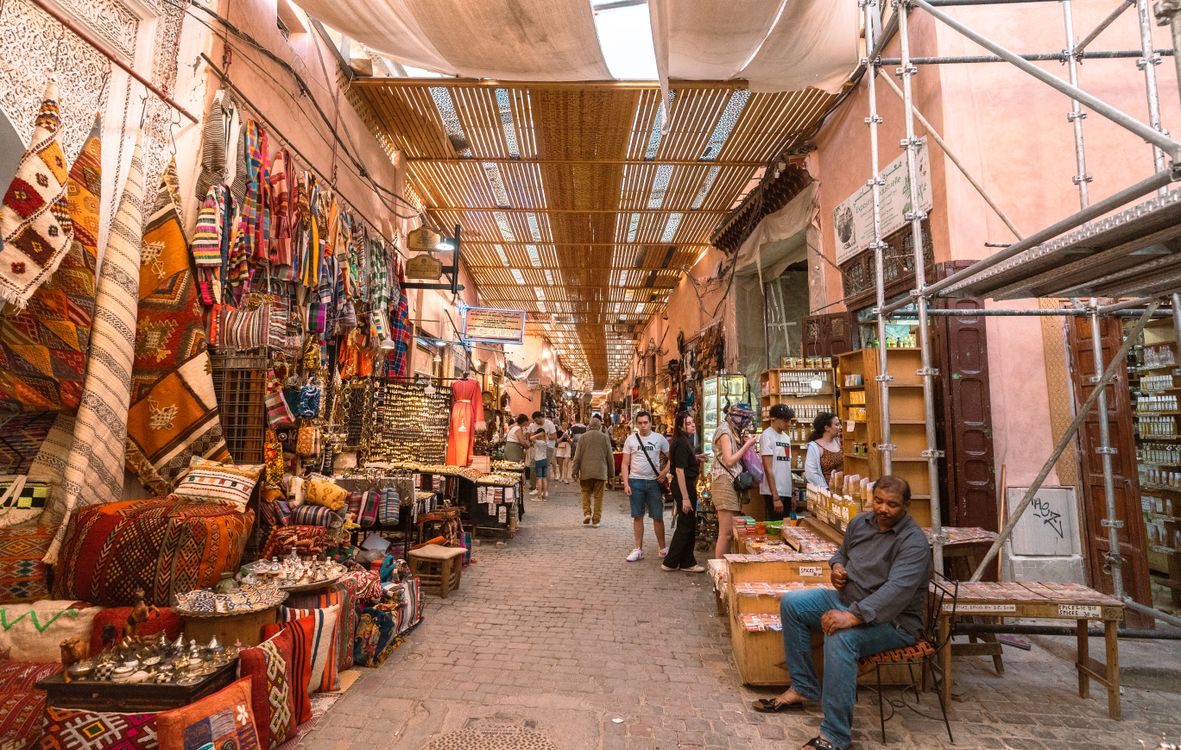
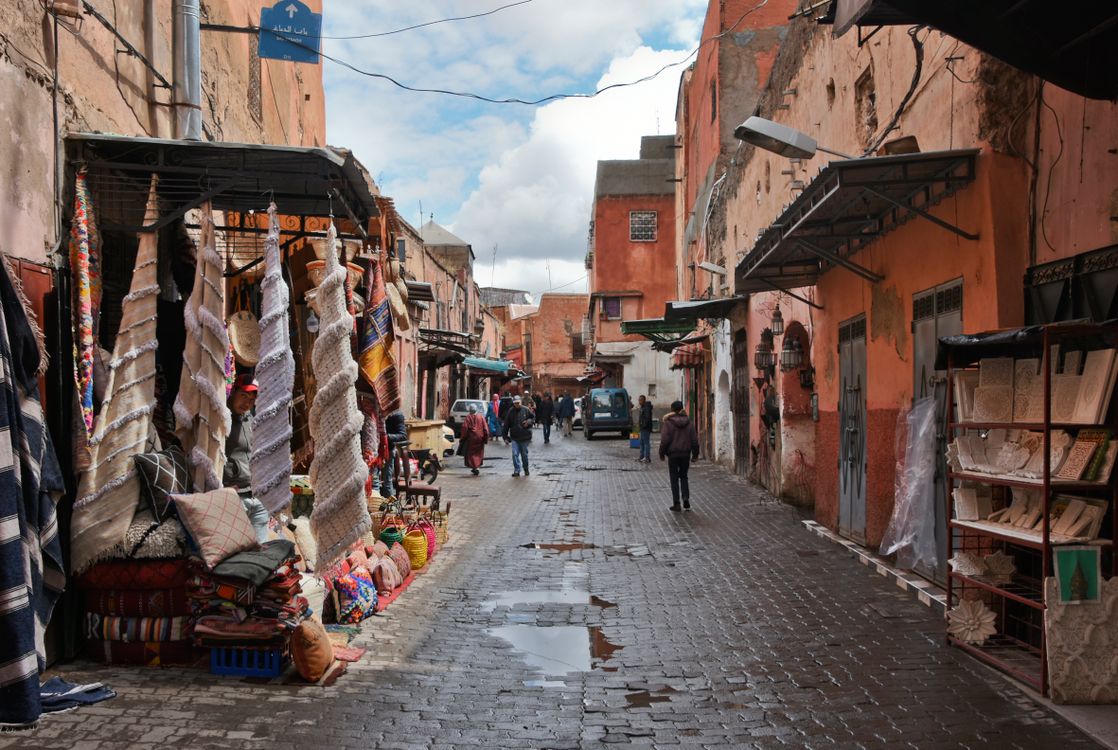
The old city of Marrakech is a dense tangle of covered lanes, many too narrow for anything wider than a loaded donkey cart. The walled medina sprawls across several hundred hectares, and almost none of it is laid out on a grid. Street signs are rare and often in Arabic script only, so a map rarely matches what you see in front of you.
On foot you reach the places that make the medina worth the trip: the dyers' lane where wool hangs drying in deep reds and blues, the carpenters' quarter loud with the sound of chisels, the quiet corner where a riad door opens onto a tiled courtyard. A guide reads the medina for you, pointing out a 16th-century doorway you would have walked straight past and steering you clear of the hard-sell shops.
Walking also solves a practical problem. Taxis cannot drop you at most interior sights, and the walk between a palace and a souk is often the most interesting part. A private driver handles everything outside the medina walls while you explore the pedestrian core on foot.
Key Stops: Souks, Palaces, Hidden Alleys and Landmarks
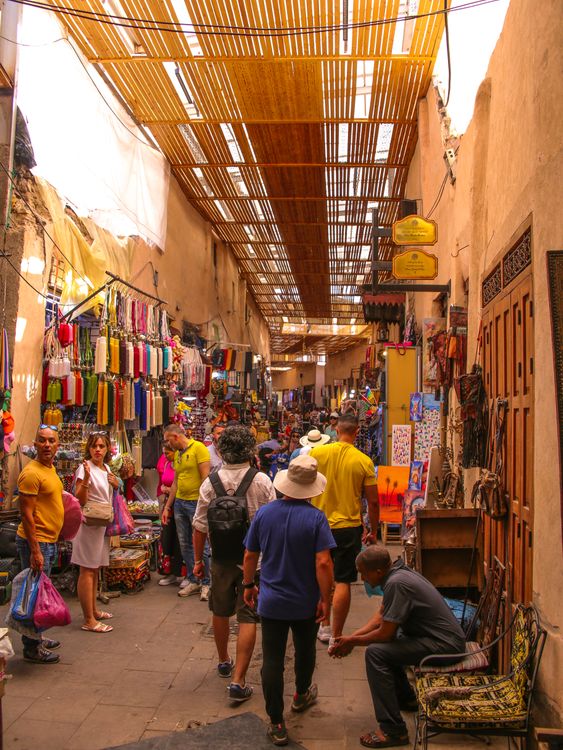
A well-planned walking route threads together the medina's highlights so you are never backtracking. These are the stops worth building your walk around.
Jemaa el-Fna Square
Most walks begin or end at Jemaa el-Fna, the great open square at the heart of the old city. UNESCO proclaimed its cultural space a Masterpiece of the Oral and Intangible Heritage of Humanity in 2001, the first site in the world to receive that designation. By day it holds orange-juice carts and snake charmers; by dusk it fills with food stalls and storytellers. For a fuller picture of what else surrounds the square, see our rundown of the best things to do in Marrakech.
The Souks
North of the square, the souks spread out in a web of specialized markets: leather, metalwork, textiles, lanterns, spices and slippers. Each trade clusters in its own lane, a layout that has barely changed in centuries. A guide helps you navigate the branching alleys and gives you a sense of fair prices before you start bargaining.
Palaces and Historic Houses
The Bahia Palace, built in the late 19th century, is the medina's showpiece of carved cedar, stucco and zellij tilework. Nearby, the Saadian Tombs hold the ornate resting places of the Saadian dynasty, sealed off for centuries and rediscovered in 1917. Both sit within easy walking distance of the souks and anchor the southern half of most routes.
Hidden Alleys and Everyday Corners
The parts of a walking tour people remember most are rarely the headline sights. They are the narrow derbs where children play football, the communal bread oven, the tiny workshop turning out brass teapots. These are the corners that a good guide builds in, and some of the finest photography in the whole city hides there in plain sight.
Choosing Between Half-Day and Full-Day Walking Routes
The right length depends on how much time you have and how deep you want to go.
A half-day walking tour runs about three to four hours. It usually covers Jemaa el-Fna, the central souks and one major monument such as the Bahia Palace. This is enough for a first orientation and works well if you have arrived that morning or have other plans for the afternoon.
A full-day walking tour lasts six to eight hours with a lunch stop in the middle. The extra time lets you add the Saadian Tombs, a garden such as the Secret Garden or Le Jardin Secret, the tanneries, and the quieter residential quarters that half-day walks skip. The pace is slower, with time to sit for mint tea and watch artisans at work.
For most visitors, the half-day walk is the better first choice. If Marrakech is a short stop on a longer trip, it covers the essentials without eating a full day. Travelers with two or more days in the city often do a half-day medina walk first, then return for a full-day tour once they have their bearings.
Tips for Comfortable Walking in Marrakech's Old City
The medina rewards walkers who come prepared. A few practical points make the difference between an easy stroll and a tiring slog.
- Wear broken-in, closed shoes. The paths are uneven stone and hard-packed earth, and open sandals leave your toes exposed to carts and scooters squeezing past.
- Start early. Mornings are cooler and the souks are just opening, so the alleys are far less crowded than they become by late morning. For a sense of what the heat does month to month, check our Morocco weather by month guide.
- Dress with respect and comfort in mind. Light, breathable fabric that covers shoulders and knees keeps you cool and suits local custom.
- Carry small cash. Many stalls and the public toilets near Jemaa el-Fna do not take cards, and small notes make bargaining easier.
- Stay with your group near the busiest junctions. The souks branch constantly, and it is easy to lose sight of a companion in a crowd.
Scooters move fast even in narrow lanes, so keep to the side and listen for a horn behind you. A guide usually calls out these moments before they happen.
Booking a Private Guided Walking Tour
A private walking tour is the most reliable way to see the medina without stress. Unlike a group walk, a private guide sets the route around your interests, slows down when you want to shop or photograph, and keeps the sales pressure off. You are not shuffling along behind a flag trying to hear a guide 20 people ahead.
Marrakech draws enough visitors that the best guides and times fill up, especially in spring and autumn. Morocco welcomed 19.8 million visitors in 2025, up 14 percent on the year before, according to figures from the country's tourism ministry reported by Further Africa. Marrakech sits at the center of that demand, so booking your walk a few days ahead secures the slot you want rather than whatever is left.
When you book, confirm a few things: how long the walk lasts, whether entry fees to palaces are included, where you meet, and whether lunch is part of a full-day route. Morocco View Travel arranges private guided walks of the medina with local guides who live in the city and tailor the route to your pace. If you prefer to combine a Marrakech walk with travel elsewhere in the country, the same team can fold it into a larger itinerary with a private driver handling the road legs.
A good walking tour leaves you knowing the medina well enough to wander a little on your own the next day. Pick a half-day private walk for your first morning in Marrakech, tell your guide what you most want to see, and let the old city open up one alley at a time.
Frequently asked questions
How long is a typical walking tour in Marrakech?
Half-day tours run about three to four hours and cover the central souks and one major monument. Full-day tours last six to eight hours with a lunch break and reach gardens and quieter neighborhoods.
Is the Marrakech medina safe to walk?
Yes. The medina is busy and well-traveled during the day. The main risks are getting lost and pushy sellers, both of which a local guide handles for you.
Can I do a walking tour without a guide?
You can, but the medina's unmarked alleys make self-guided walks frustrating. Most first-time visitors reach far more in less time with a private guide.
What should I wear for a walking tour in Marrakech?
Closed, comfortable shoes you have already broken in, light breathable clothing that covers shoulders and knees, and a hat. The old city has uneven stone paths and little shade.
When is the best time of day to start a walking tour?
Early morning is best. Temperatures are lower, the souks are opening, and the alleys are less crowded than they become by late morning.