
Key takeaways
- A guided Marrakech food tour walks you through medina souks and Jemaa el-Fnaa, with a local guide handling language, haggling, and hygiene choices.
- Core tastings usually include tagine, harira soup, msemen, grilled skewers, and fresh orange juice from the square's juice carts.
- Morocco welcomed 17.4 million tourists in 2024, up 20% on 2023, so booking a private slot in advance matters in Marrakech.
- Pairing the tour with a cooking class or a morning market visit turns a tasting into a hands-on lesson in Moroccan cooking.
- A private, dietary-friendly tour lets you flag vegetarian, halal, or allergy needs before you go, so your guide plans stalls around them.
Marrakech food tours give you a guided path through the medina's stalls, souks, and the open-air kitchens of Jemaa el-Fnaa, with a local who orders, translates, and points you to the dishes worth your appetite. If you are comparing providers before you book, this guide covers what a good tour includes, what to eat, and how to arrange a private, dietary-friendly version that fits your group.
The pull is simple. Morocco welcomed 17.4 million tourists in 2024, a 20% jump over 2023 (Kingdom of Morocco, 2024). More visitors means busier stalls and fuller cooking classes, so the people who plan ahead get the calmer, better-run slots.
What Do Marrakech Food Tours Include?
A guided food tour in Marrakech is a walking route through the old city built around a series of tastings. Expect three to four hours on foot, six to ten small plates, and a guide who handles the ordering, the language, and the hygiene calls that trip up first-time visitors.
The real value is local knowledge. Your guide knows which stalls cook to order and which let food sit. They explain each dish, manage the back-and-forth over price, and read the medina's lanes so you never feel lost. That turns a maze of souks into a clear, well-paced meal.
A strong tour also balances food with context. You walk past spice mounds, olive stalls, and bread ovens tucked into side streets. You learn why a dish tastes the way it does, not just that it is good. Many food tours overlap with Marrakech medina tours, so you get history alongside each bite.
What should you confirm before booking? Ask how many tastings are included, whether water and tips are covered, and the group size. Small groups move faster and get more guide attention.
Must-Try Street Food and Jemaa el-Fnaa Night Eats
Jemaa el-Fnaa is the heart of any Marrakech food tour, and at dusk it turns into one of the world's great open-air dining halls. The square was recognized by UNESCO as a Masterpiece of the Oral and Intangible Heritage of Humanity in 2001, a rare listing that honors its living culture of storytellers, musicians, and food vendors rather than its buildings.
As the sun drops, numbered food carts roll in and the grills light up. Smoke carries the smell of cumin and charcoal across the square. Vendors call out, plates clatter, and the whole space fills with people eating shoulder to shoulder at shared benches.
Here is what to look for among the night eats:
- Grilled skewers of lamb, chicken, or kefta, cooked over coals to order.
- Bowls of snail broth, a local favorite sold from steaming cauldrons.
- Merguez sausage, spiced and sizzling, served with bread.
- Sheep's head and other offal dishes for the adventurous.
- Trays of Moroccan pastries and dates for a sweet finish.
Busy stalls are your friend. High turnover means food is cooked fresh and rarely sits, which is the simplest rule for eating street food well. A guide steers you to the vendors locals actually trust.
Sampling Tagine, Harira, Msemen and Fresh Orange Juice
The core of Moroccan cooking shows up on nearly every Marrakech food tour, and four items anchor the experience: tagine, harira, msemen, and the square's famous orange juice. Together they cover slow cooking, soup, bread, and the drink that defines the market.
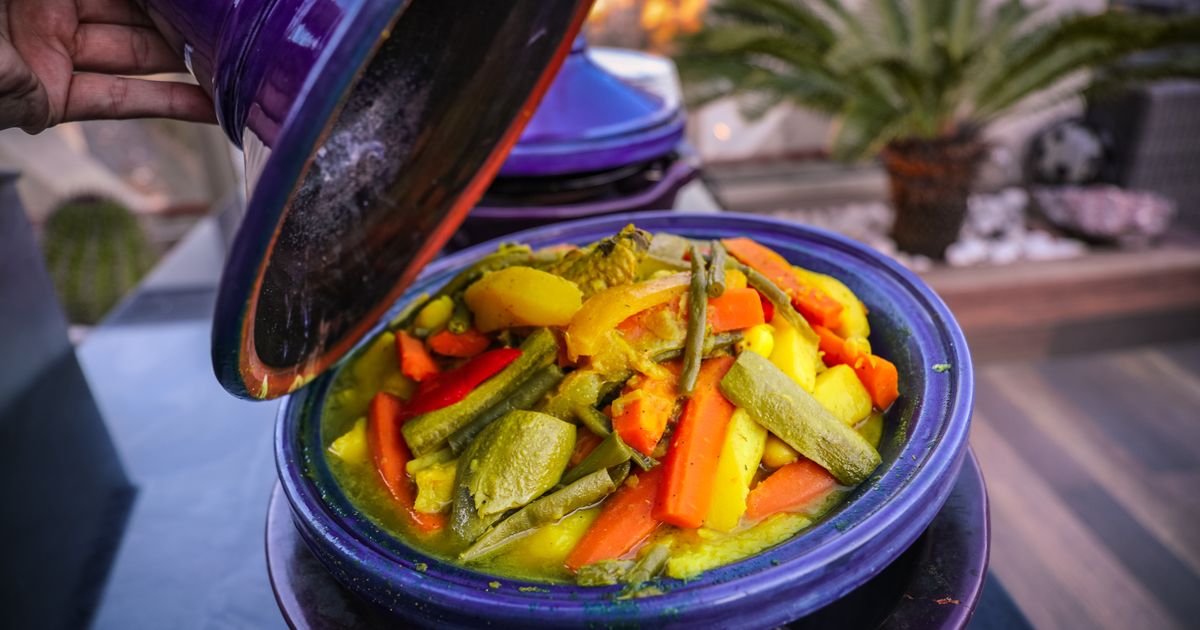
Tagine is the signature. Meat or vegetables cook slowly in a cone-shaped clay pot, turning tender and soaking up spices, preserved lemon, and olives. Each cook has a version, so no two tastes are quite alike.
Harira is the soup that breaks the fast during Ramadan and warms cool evenings year-round. It blends tomato, lentils, chickpeas, and herbs into something hearty and deeply savory. Many stalls serve it with a date or a wedge of lemon.
Msemen is the flaky, square flatbread folded and griddled until crisp at the edges. You will see it made by hand, stretched thin and layered with oil, then eaten plain, with honey, or with cheese.
Then there is the orange juice. Rows of juice carts line Jemaa el-Fnaa, pressing fruit to order for a few dirhams a glass. It is bright, cheap, and the easiest refreshment on a warm walk through the medina.
Pairing the Food Tour With a Cooking Class or Market Visit
Pairing your Marrakech food tour with a cooking class or a morning market visit turns tasting into doing. With tourism up sharply in 2024, these hands-on add-ons book out faster, so lock them in early.
A cooking class usually starts where the food comes from. You shop a local market with a chef, choosing vegetables, spices, and meat, then cook a tagine or a batch of msemen in a riad kitchen. You leave able to recreate a dish at home, which is a better souvenir than anything from a stall.
A morning market visit works differently. Markets wake early, before the heat and the crowds, so you see vendors stacking produce, butchers at work, and spice sellers building their cones. It is quieter, more local, and easier to ask questions.
Which pairing fits you? Choose the cooking class if you want a skill to take home. Choose the market walk if you prefer watching the medina's rhythm up close. Either one deepens what a straight tasting tour gives you, and both slot neatly around a half day of sightseeing in the city.
How to Book a Private, Dietary-Friendly Food Tour
A private, dietary-friendly food tour is the easiest way to eat well in Marrakech on your own terms. You share your needs before you arrive, and your guide plans the route around them, swapping stalls so vegetarian, halal, or allergy requirements never cut the experience short.
Start by booking private rather than joining a shared group. A private tour means the pace, the stops, and the menu flex to your table. That matters most when someone avoids gluten, meat, or specific allergens, because the guide can confirm ingredients at each stall.
Be specific when you book. List every restriction, note how strict it is, and mention any dishes you want to try. A good operator uses that list to choose vendors in advance instead of improvising on the night.
Morocco View Travel runs private, customized tours with local drivers and guides who know the medina's stalls first-hand, which makes dietary planning straightforward. Many travelers add the food tour to a wider itinerary, so hiring a private driver keeps the whole trip flexible.
Ready to taste the medina? Decide on your dates, write down your dietary needs, and request a private evening slot around Jemaa el-Fnaa so you catch the square at its liveliest. That single booking choice shapes how good the night turns out.
Frequently asked questions
How long does a Marrakech food tour take?
Most run three to four hours. Evening tours built around Jemaa el-Fnaa often start near sunset and cover six to ten tastings across the square and nearby souks.
Are Marrakech food tours suitable for vegetarians or people with allergies?
Yes, if you book a private tour and share your needs in advance. A dedicated guide can route you to vegetable tagine, salads, bread, and juice stalls, and skip anything unsafe.
Is street food in Marrakech safe to eat?
Busy stalls with high turnover are generally your safest bet, since food is cooked fresh and rarely sits out. A local guide knows which vendors locals trust.
How much should I budget for a food tour in Marrakech?
Private guided food tours vary by operator and group size. Confirm whether food, water, and tips are included when you book, so the quoted price reflects the full experience.
Should I eat dinner before a food tour?
No. Come hungry. A typical tour serves enough small plates, soup, bread, and sweets to replace a full meal, so arriving on an empty stomach lets you taste more.