
Key takeaways
- Moroccan mint tea blends Chinese gunpowder green tea, fresh spearmint, and sugar, poured from a height to build its signature foam.
- Offering tea is a core act of hospitality; refusing a glass can read as a snub, so accept at least one.
- Morocco imported US$289.3 million of tea in 2025, ranking as the sixth largest tea importer worldwide (World's Top Exports).
- The three-glass custom frames tea as a shared, unhurried ritual rather than a quick drink.
- The best place to learn the ceremony is a home, riad, or roadside stop with someone who grew up making it.
Moroccan mint tea is a sweet blend of Chinese gunpowder green tea, fresh spearmint, and sugar, served hot in small glasses throughout the day. More than a drink, it is the center of Morocco tea culture, offered to welcome guests, close a market deal, or simply pass an afternoon. If you travel in Morocco, you will be handed a glass almost everywhere, and knowing what it means makes the gesture far richer.
Locals often call it "Berber whisky," a wink at how central the ritual is to daily life. The tea is strong, very sweet, and poured with a flourish. Learning to read that moment, when to accept, how to sip, what the pouring means, turns a simple glass into one of the warmest parts of any trip.
What role does mint tea play in Moroccan hospitality?
Mint tea is the main language of welcome in Morocco. Offer or accept a glass, and you have entered a small social contract of warmth and respect. The drink appears at nearly every threshold of daily life: a guest arriving, a rug being shown in a shop, a long conversation getting started. Turning it down flatly can feel like refusing the host's goodwill.
The custom runs deep enough that tea shapes the national appetite for the leaf itself. In 2025, Morocco imported US$289.3 million of tea, ranking as the sixth largest tea importer in the world, and that volume grew 18.2% from the previous year (World's Top Exports, 2025). For a country of its size, that places Morocco among the most tea-driven cultures anywhere.
When you are offered tea, the polite move is simple: accept at least one glass, hold it by the rim to avoid the hot sides, and take your time. You are not expected to rush. The offer is the point, and sitting with it signals that you value the welcome.
How is Moroccan mint tea prepared and poured?
Traditional preparation starts with Chinese gunpowder green tea, so named because the leaves are rolled into tight pellets that unfurl in hot water. The tea maker rinses the leaves, then brews them with a thick bundle of fresh spearmint and a heavy dose of sugar in a metal pot set directly over heat.
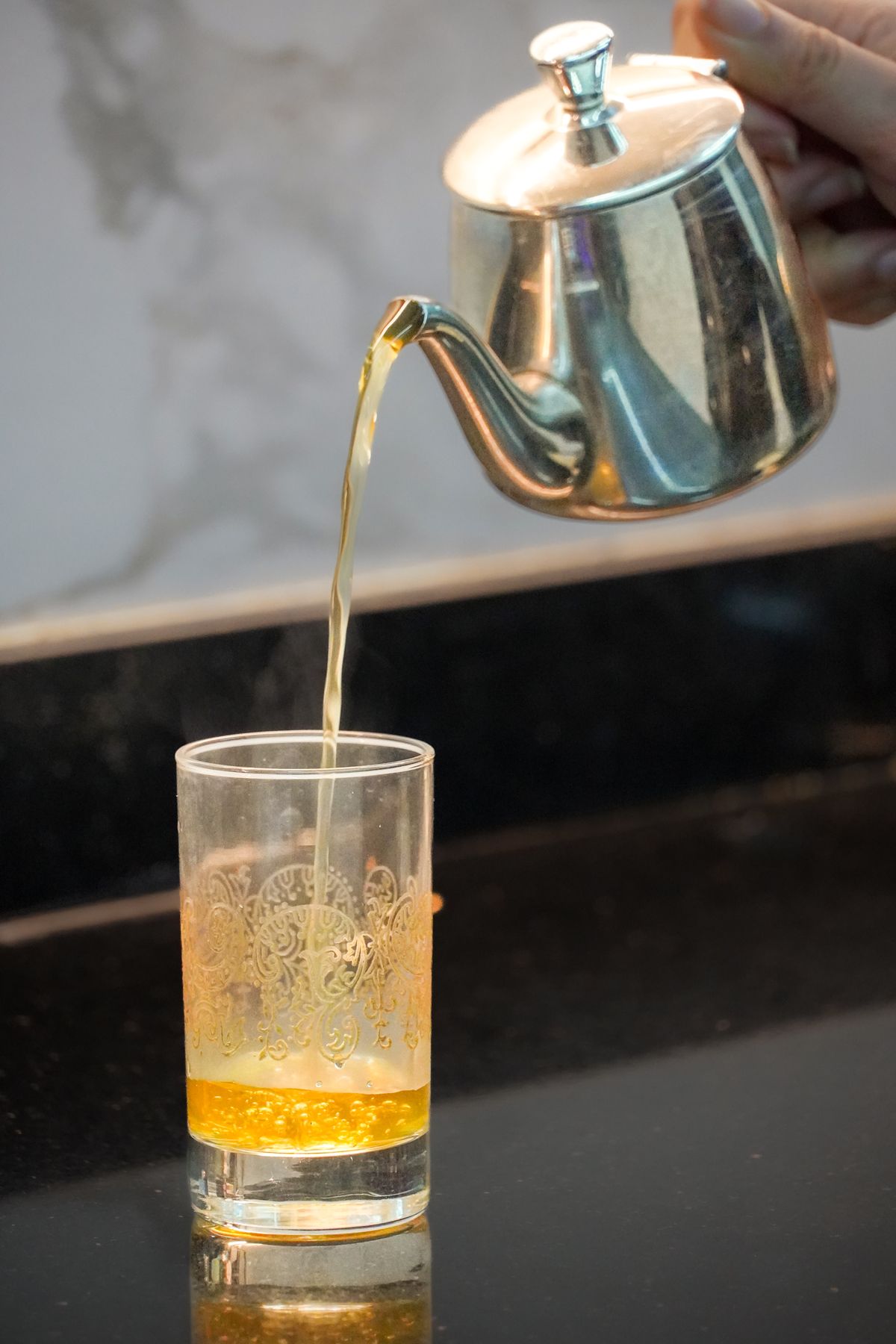
The signature step is the pour. The server lifts the pot high above the glass, sometimes a foot or more, and lets the tea fall in a thin stream. This aerates the liquid and builds a delicate layer of foam on top, which is considered the mark of a well-made glass. Saharan tradition adds a practical reason: in the desert, the foam and bubbles once helped keep blowing sand off the surface.
Tea makers often pour the first glass back into the pot once or twice to mix the brew evenly before serving. Expect it sweet. Sugar is woven into the recipe rather than added at the table, though you can ask for less. For a fuller taste of the Moroccan table, our Moroccan food guide covers the dishes that most often share a meal with a pot of tea.
What is the symbolism behind the three glasses?
The three glasses are a well-known expression of patience and togetherness. A widely repeated Maghrebi saying frames them as a small poem about life: the first glass is as gentle as life, the second as strong as love, and the third as mellow as death. The wording shifts from family to family, but the message holds steady.
Practically, the symbolism asks you to slow down. Tea is not a single quick cup but a sequence shared over time, often as the leaves are rebrewed and the flavor changes with each round. Staying for all three glasses signals that you are present, unhurried, and happy in the company.
For travelers, this is the easy part to honor. You do not need to memorize the saying. You simply linger, accept a refill, and let the conversation stretch. That rhythm, more than any single flavor, is what people remember about Morocco tea culture long after they return home.
Where can you experience an authentic tea ceremony?
The most authentic tea moments happen where someone grew up making it: a family home, a traditional riad, a Berber house in the Atlas, or a roadside stop in the south. The setting matters less than the person pouring. A grandmother in a village or a riad host in Marrakech will often make tea with more care than any tourist cafe.
Riads are a reliable place to start, since serving welcome tea on arrival is part of the tradition. If you want to stay somewhere that takes the ritual seriously, our guide to the best riads in Marrakech points to places built around exactly this kind of hospitality.
Cafes in Fes and Marrakech serve good tea too, especially those with rooftop terraces. But the deepest experiences tend to come on the road, in the Atlas foothills or on the way to the desert, where tea is still an unselfconscious daily habit rather than a performance for visitors.
How do you buy tea, glasses, and teapots as souvenirs?
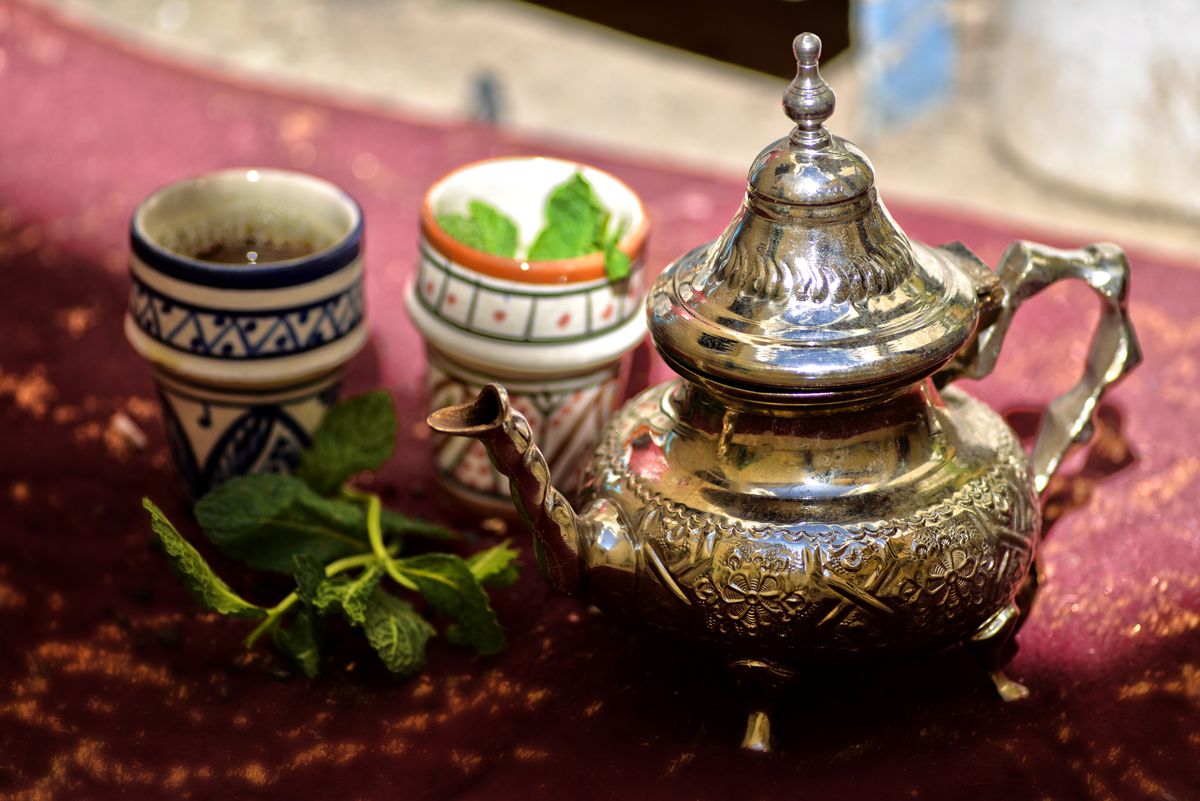
Tea sets are among the most practical souvenirs you can bring home, and the souks make them easy to find. Look for three things: loose gunpowder green tea, often sold already blended with dried mint; a metal teapot with a long curved spout built for the high pour; and a set of small decorated glasses.
Prices are modest and negotiable. Metal teapots are light and pack well if you wrap them in clothing, and the glasses, though breakable, are inexpensive enough to risk. Buy the glasses in a set rather than singly, since a matching group is part of the look. If you want authenticity, choose loose tea and fresh or dried mint over pre-bagged blends made for export.
A quick tip on packing: wrap glasses individually and nest them inside the teapot or a shoe to cushion them, then carry them in your hand luggage so nothing gets crushed on the way home.
How can you enjoy tea moments on your tour?
Tea moments are some of the easiest highlights to build into a trip, because they happen naturally wherever you pause. On a private tour, your driver and guide can read a region and stop at the right spot: a mountain village, a desert camp, a family they know. Those unplanned glasses, shared on a terrace or beside the road, tend to become the stories travelers tell most.
At Morocco View Travel, tea is woven into the flexible, private itineraries we run with local drivers across the country. Because the route is yours, there is room to linger over a pot rather than rush to the next sight. That pacing is the difference between watching the ritual and taking part in it.
The best next step is simple: on your first evening in Morocco, accept the welcome tea, stay for all three glasses, and ask whoever pours it how they make theirs. That one conversation will teach you more about Moroccan hospitality than any guidebook, and it costs nothing but a little time.
Frequently asked questions
What is Moroccan mint tea made of?
It combines Chinese gunpowder green tea, fresh spearmint leaves, and a generous amount of sugar, brewed in a metal teapot and poured from a height to create foam.
Why is Moroccan tea poured from so high?
The high pour aerates the tea and builds a light foam on top. Saharan tradition also says the bubbles once helped keep blowing sand off the surface.
Is it rude to refuse mint tea in Morocco?
Often, yes. Tea is an offer of hospitality, so declining can feel like rejecting the welcome. Accepting even one small glass is the polite choice.
What does the three glasses tradition mean?
A well-known saying compares the three glasses to life: the first gentle, the second strong, the third mellow. It frames tea as a slow, shared ritual.
Can I buy Moroccan tea glasses and teapots to take home?
Yes. Souks across Morocco sell metal teapots, decorated glasses, and loose gunpowder tea with mint. These are affordable, packable, and widely available.