
Key takeaways
- Tours from Marrakech fall into three types: single-day trips, overnight desert tours of 2 to 4 days, and longer multi-city routes.
- Private departures give you a flexible schedule and your own vehicle, while shared tours cost less but follow a fixed group plan.
- Morocco welcomed 19.8 million tourists in 2025, so booking ahead for peak months is wise.
- The Sahara near Merzouga is a long drive from Marrakech, which is why most desert trips need at least two days.
- A custom itinerary lets you combine the Atlas Mountains, the coast and the desert on one route.
Tours from Marrakech come in three broad shapes: short day trips you finish by dinner, overnight desert tours of two to four days, and longer multi-city routes across Morocco. The right choice depends on how much time you have and how far you want to roam. This guide walks through each option so you can book with confidence rather than guesswork.
Marrakech sits at a natural crossroads. The High Atlas rises just south, the Atlantic coast lies a couple of hours west, and the Sahara waits to the east. That geography makes the city one of the best starting points in the country. Morocco welcomed 19.8 million tourists in 2025, a 14 percent rise on the year before, according to figures from the Ministry of Tourism reported by Xinhua. Many of those visitors used Marrakech as their base, so you have plenty of well-worn routes to pick from.
What Types of Tours from Marrakech Are There?
Tours from Marrakech split into three categories by length: day trips, desert tours, and multi-city routes. Day trips cover nearby valleys, mountains and coast in a single outing. Desert tours run two to four days and reach the dunes. Multi-city routes string several regions together over a week or more. Each suits a different travel style.
Day trips are the easiest to slot into a busy schedule. You leave in the morning, see a headline sight, and return the same evening. Popular choices include the Ourika Valley, the Atlas foothills, Essaouira on the coast, and the kasbah of Aït Benhaddou. If you prefer to stay in town, Marrakech itself rewards a slower, on-foot look through its souks and squares.
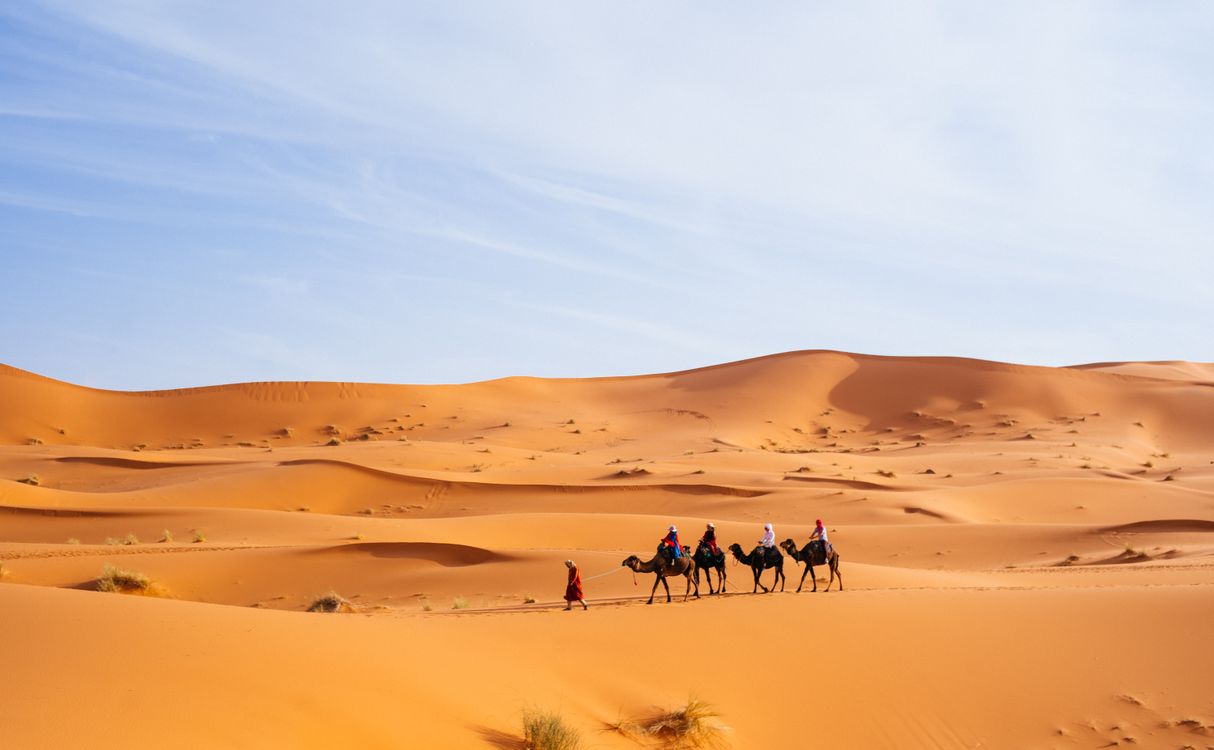
Desert tours are the reason many people come to Morocco in the first place. These trips carry you east toward Merzouga and its tall dunes, with a night spent in a camp under open sky. The overnight stay is the heart of the experience, with a camel ride into the dunes and a quiet morning before the drive back.
Short Excursions or Longer Journeys Across Morocco?
The split comes down to drive time. A short excursion keeps you within about two hours of Marrakech, so you spend most of the day at the sight rather than on the road. A longer journey accepts a full day of driving in exchange for reaching places that a quick trip simply cannot touch, like the Sahara or the north.
Short excursions work well if Marrakech is your main stop and you want a taste of the wider country. The Atlas Mountains make a strong half-day or full-day pick. Mount Toubkal, the highest peak in North Africa, sits a short drive south of the city, close enough that you can reach trailheads, Berber villages and waterfalls without an overnight stay.
Longer journeys suit travelers who want depth. Crossing to the Sahara and back by road takes real time, which is why overnight trips exist. The payoff is a night in the dunes, mountain passes along the way, and villages far from the usual crowds. When weighing trip length, remember that two days means a brisk pace, while three or four days leaves room to slow down.
How Do You Combine the Atlas, Coast and Sahara?
You combine them by treating Marrakech as a hub and planning loops outward. The Atlas sits due south, the coast due west, and the Sahara to the east, so a thoughtful route visits them in sequence rather than backtracking. A common approach is a multi-day loop that crosses the Atlas, spends a night in the desert, then returns through scenic valleys.
A classic eastbound route climbs the Tizi n'Tichka pass, stops at Aït Benhaddou, then follows the Dades and Todra gorges toward the dunes. Aït Benhaddou is a UNESCO World Heritage Site, prized for its earthen architecture and often seen in films. That single corridor packs mountains, kasbahs and the Sahara into one trip. Our scenic route guide to Dades and Todra maps the stops in detail.
For the coast, Essaouira pairs easily with a Marrakech stay as a day trip or a short overnight. Fitting all three regions into one visit is doable, but it rewards planning. A loop that moves in one direction wastes far less time than one that doubles back.
Should You Book a Private or Shared Departure?
Choose private if you value a flexible schedule and your own space; choose shared if price is your main concern. Private tours give you a dedicated vehicle, a driver who adjusts the plan to your pace, and no strangers on board. Shared tours cost less because the group splits the price, but you follow a set route and timetable.
Private departures shine for families, small groups, and anyone who wants to linger at a viewpoint or skip a stop entirely. You decide when to leave, where to eat, and how long to stay. A private driver also smooths out the long desert drives and handles the navigation for you. This is the model Morocco View Travel is built around.
Shared departures make sense for solo travelers and couples on a tighter budget who do not mind a fixed plan. You meet the group at a set time, follow a standard itinerary, and share the vehicle. The experience is still rewarding, just less tailored. With 19.8 million visitors in 2025, shared group tours remain a common and affordable way to see the headline sights.
How Do You Build a Custom Itinerary from Marrakech?
You build a custom itinerary by listing the regions you care about, matching them to the days you have, then ordering them to minimize backtracking. Start with your fixed points, a desert night or a coastal day, then fill the gaps with stops that sit along the way. A private operator can shape the route around your interests.
Begin with time. A long weekend suits one or two day trips plus the city. Five to seven days opens up a desert loop with coast or mountains added. Ten days or more lets you reach the north, including Fes and Chefchaouen. Our 10-day Morocco itinerary shows how a full loop fits together.
Next, decide your pace. Packing six stops into three days means a lot of driving and little rest. Fewer stops with longer stays usually make for a better trip. Morocco View Travel builds private, customized routes from Marrakech, so you can mix a desert camp, a mountain pass and a coastal afternoon into a single plan that matches how you like to travel.
To move from browsing to booking, pick your must-see region first, the Sahara, the Atlas or the coast, then choose private or shared based on your budget and group size. From there, a short message to a private operator like Morocco View Travel turns a rough idea into a day-by-day itinerary you can actually follow.
Frequently asked questions
How many days do I need for a Sahara tour from Marrakech?
Most Sahara trips to Merzouga need at least two days because of the long drive each way. Three or four days give you a calmer pace and more stops along the route.
Are tours from Marrakech private or shared?
Both are available. Private tours use your own vehicle and driver with a flexible schedule, while shared tours group you with other travelers on a fixed plan at a lower price.
What are the most popular day trips from Marrakech?
The Atlas Mountains, the Ourika Valley, Essaouira on the coast, and Aït Benhaddou are the most common single-day trips. Each one is close enough to return to Marrakech the same evening.
Can I combine Marrakech with other Moroccan cities on one tour?
Yes. Multi-city routes often link Marrakech with Fes, Chefchaouen or the coast over several days, usually with a Sahara night included on the longer loops.
When is the best time to book tours from Marrakech?
Book a few weeks ahead for spring and autumn, the busiest seasons. Morocco drew 19.8 million visitors in 2025, so popular dates fill quickly during peak months.