Morocco destination guide
Atlas Mountains
High passes, valleys and Amazigh villages
Overview
Atlas Mountains
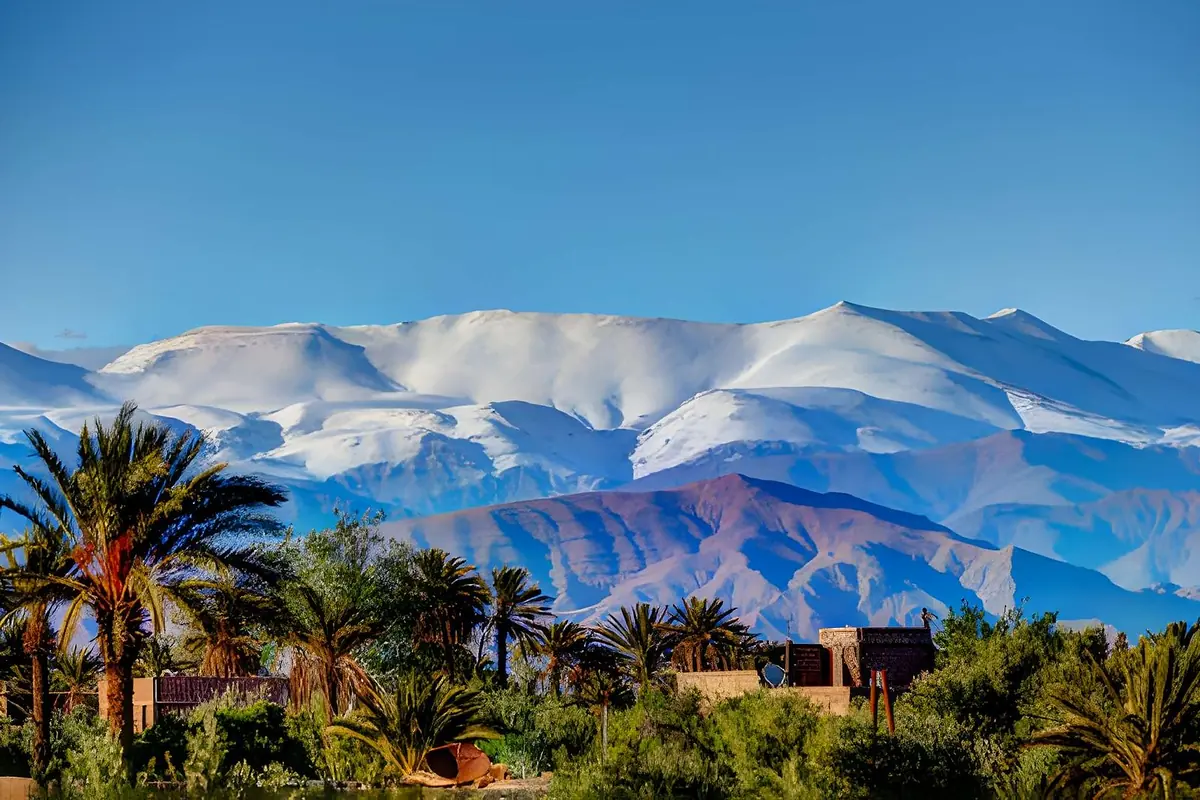
The Atlas Mountains change with altitude and season. Some travellers cross Tizi n’Tichka toward the south; others slow down in Ourika, Ouirgane or village valleys. The right choice depends on walking ability, road conditions and the wider route.
History and cultural context
History and cultural context
The Atlas Mountains form a vast system across Morocco, Algeria and Tunisia; in Morocco they include the Middle Atlas, High Atlas and Anti-Atlas. For centuries these ranges have been homelands of Amazigh communities whose villages, languages, terrace farming, pastoral routes, granaries and weekly markets developed in response to altitude, water and seasonal movement.
Mountain passes connected Atlantic and imperial cities with oasis valleys and Saharan trade routes, while valleys maintained strong local identities and systems for sharing land and irrigation. Today the region combines living cultural landscapes with major protected areas and trekking routes. Travel is most rewarding when it supports local guides, family-run accommodation and community businesses.
Best time to visit
Best time to visit
Spring and autumn suit many valley walks. Summer is cooler at altitude than Marrakech, while winter can bring snow and restricted access on high routes.
Weather and what to pack
Weather and what to pack
Conditions change quickly with elevation. Pack layers, sun protection and sturdy shoes, and never assume mountain weather matches the city forecast.
Useful planning tips
Useful planning tips
- Choose walks that match your fitness and footwear.
- Use local guidance for longer trails.
- Keep winter routes flexible after snowfall.
Things to see and experience
Things to see and experience
These are the essential places and experiences to prioritise, with enough time to understand the history and local context behind each stop.
Imlil and Toubkal National Park
Use Imlil as a base for village walks or the multi-day ascent of Mount Toubkal, North Africa’s highest summit. High routes require suitable fitness, equipment and an authorised mountain guide.
Ourika Valley
Follow the river into the High Atlas for village scenery, gardens and trailheads near Setti Fatma. Visit on quieter weekdays and treat waterfall walks carefully after rain.
Ait Bouguemez Valley
Known as the Happy Valley, this broad high-altitude landscape combines mud-brick villages, cultivated terraces, communal granaries and access to longer M’Goun treks.
Ouirgane and the N’Fis Valley
Choose this gentler western High Atlas base for forest walks, village visits and relaxed views around the reservoir, with fewer crowds than the busiest day-trip valleys.
Tizi n’Tichka and Telouet
Cross the High Atlas on the historic road toward Ouarzazate, stopping at mountain viewpoints and the Telouet Kasbah before continuing through the Ounila Valley.
Amazigh villages and weekly markets
Build time for a guided village walk, a shared meal or a local souk. Respect private homes, ask before photographing people and buy crafts directly when possible.
Morocco View Travel
Suggested private tours
These existing routes connect naturally with this destination and can be customized around your dates.