Morocco destination guide
Casablanca & Rabat
Modern gateways, Atlantic landmarks and royal history
Overview
Casablanca & Rabat
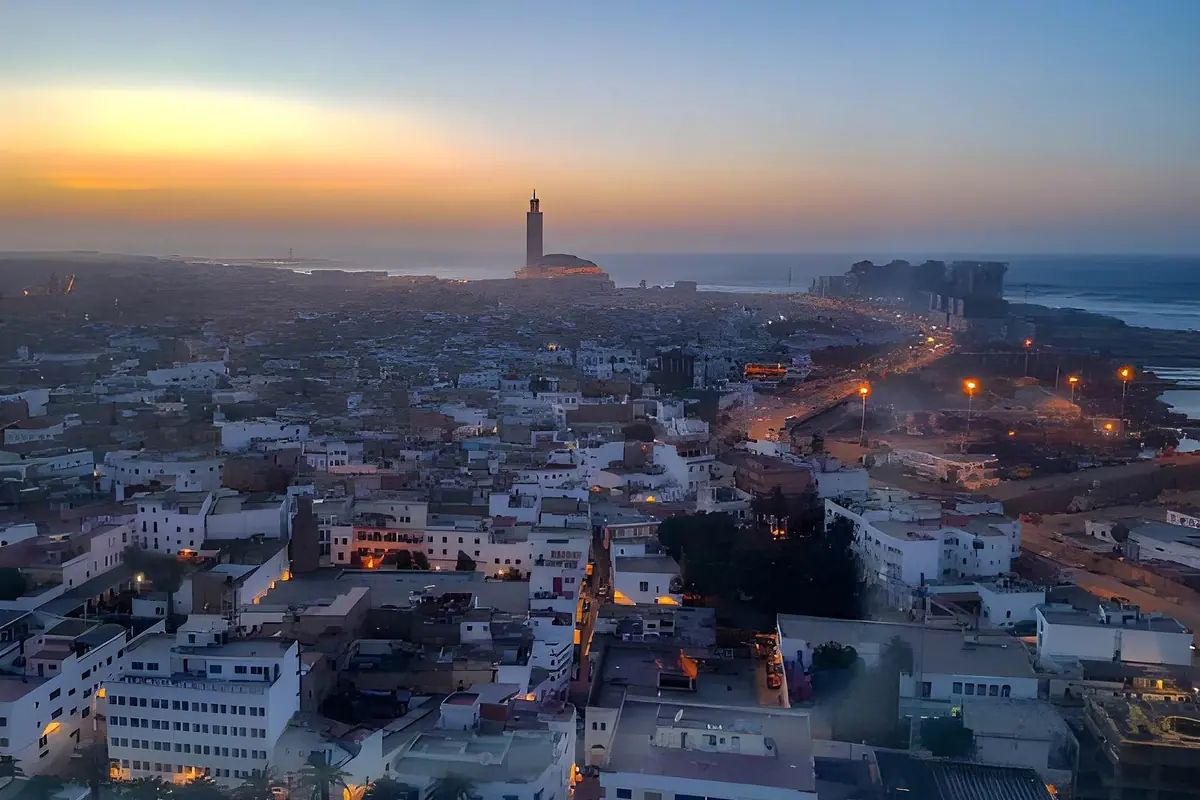
Casablanca is Morocco’s main international gateway and commercial centre, while Rabat brings a calmer capital atmosphere and important historic sites. Together they form a practical first or final stage for longer routes.
History and cultural context
History and cultural context
Casablanca grew from the older settlement of Anfa, an Atlantic trading centre that was destroyed by the Portuguese in the fifteenth century. Sultan Sidi Mohammed ben Abdallah rebuilt the port settlement as Dar al-Beida in the late eighteenth century. Rapid expansion under the French Protectorate transformed it into Morocco’s largest commercial city, leaving a notable legacy of Art Deco, Neo-Moorish and modernist architecture.
Rabat’s history reaches back through the ancient site of Chellah, but its monumental identity was shaped by the Almohads in the twelfth century, when a fortified ribat, walls, gates and the vast Hassan Mosque project formed part of an imperial capital. Andalusian refugees influenced Rabat-Salé in the seventeenth century, and Rabat became Morocco’s modern capital in 1912. UNESCO recognises the city’s dialogue between historic fabric and twentieth-century planning.
Best time to visit
Best time to visit
Both cities can be visited year-round. Spring and autumn are mild; summer benefits from Atlantic air, while winter may bring rain and cool evenings.
Weather and what to pack
Weather and what to pack
The coast is generally milder than inland Morocco. Bring a light jacket for wind, a rain layer in winter and modest clothing for religious sites.
Useful planning tips
Useful planning tips
- Match city visits to flight and train times.
- Check visiting hours for major monuments.
- Avoid planning too many cross-city stops in one day.
Things to see and experience
Things to see and experience
These are the essential places and experiences to prioritise, with enough time to understand the history and local context behind each stop.
Hassan II Mosque, Casablanca
Tour one of the world’s great modern mosques, built partly above the Atlantic and celebrated for Moroccan craftsmanship. Non-Muslim visitors should use official guided visiting hours.
Habous Quarter and Mahkama du Pacha
Walk through arcades, bookshops, bakeries and craft stores in the early twentieth-century New Medina; arrange access in advance if you hope to see the Mahkama’s interior.
Casablanca’s Art Deco centre
Explore Mohammed V Square, United Nations Square and surrounding boulevards to see façades that blend European modernism with Moroccan decorative forms.
Old Medina and Ain Diab Corniche
Contrast the compact historic quarter near the port with the open Atlantic promenade, beaches, cafés and sunset views along the Corniche.
Hassan Tower and Mohammed V Mausoleum, Rabat
Visit the unfinished twelfth-century Almohad minaret and forest of columns beside the richly decorated royal mausoleum, one of the capital’s essential historic ensembles.
Kasbah of the Oudayas
Enter through the monumental Almohad gate, wander blue-and-white lanes and pause in the Andalusian Garden before overlooking the Bouregreg estuary.
Chellah archaeological site
Explore layers of Roman Sala Colonia and the later Marinid necropolis within landscaped walls. Allow time for archaeology, carved stone, gardens and birdlife.
Rabat medina and modern museums
Combine the medina and Rue des Consuls with the Mohammed VI Museum of Modern and Contemporary Art or the Museum of History and Civilizations.
Morocco View Travel
Suggested private tours
These existing routes connect naturally with this destination and can be customized around your dates.