Morocco destination guide
Chefchaouen
Blue lanes and Rif Mountain viewpoints
Overview
Chefchaouen
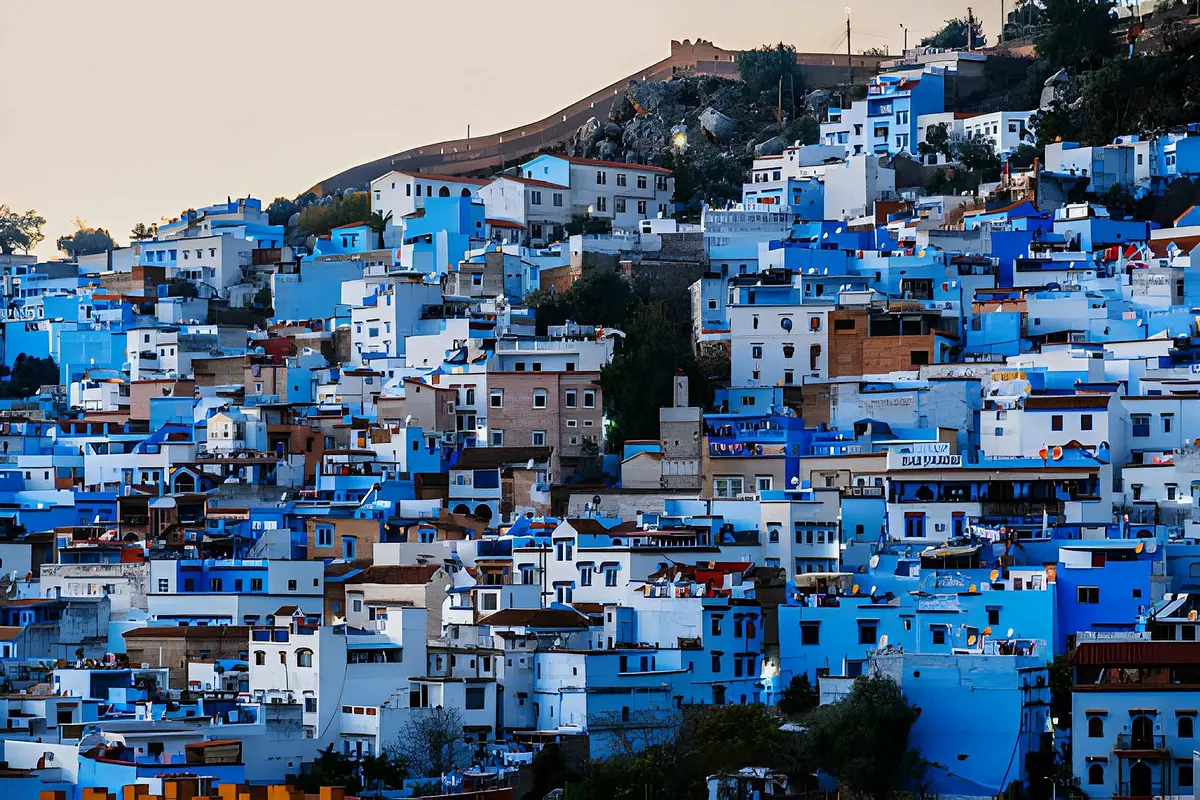
Chefchaouen is a compact mountain town known for blue-painted streets and a relaxed old centre. It pairs naturally with Tangier, Tetouan, Volubilis and Fes, but the winding approach means travel time should be planned carefully.
History and cultural context
History and cultural context
Chefchaouen grew around a kasbah founded in 1471 in the Rif Mountains, originally intended to help defend the region during Portuguese expansion along Morocco’s northern coast. Muslim and Jewish families arriving from al-Andalus after the Reconquista strongly influenced the town’s architecture, crafts, music and urban character.
The compact medina developed beneath the twin mountain peaks that gave the town its name. Chefchaouen later formed part of the Spanish Protectorate in northern Morocco before independence in 1956. Its blue-washed lanes are now famous worldwide, although the precise origin of the blue tradition has several competing explanations; the city’s deeper identity remains rooted in Rif culture and Andalusian heritage.
Best time to visit
Best time to visit
April to June and September to October are popular for pleasant walking weather. Winter can be rainy and cool; summer mornings and evenings are calmer.
Weather and what to pack
Weather and what to pack
The Rif is cooler and wetter than southern Morocco. Bring a light waterproof layer outside summer and comfortable shoes for slopes and polished lanes.
Useful planning tips
Useful planning tips
- Stay overnight to enjoy quieter mornings.
- Respect residents when photographing doorways.
- Allow extra road time in wet or busy periods.
Things to see and experience
Things to see and experience
These are the essential places and experiences to prioritise, with enough time to understand the history and local context behind each stop.
Outa el Hammam and the Kasbah
Begin in the medina’s main square, then enter the restored kasbah for its garden, ethnographic displays, historic tower and views over the tiled roofs.
The blue medina lanes
Explore slowly around Souika, El Kharrazine and the upper medina, where blue walls frame arched doorways, weaving shops, bakeries and small neighbourhood squares.
Ras El Maa spring
Walk to the eastern edge of the medina where mountain water emerges beside old washing areas, cafés and a path leading above the town.
Spanish Mosque viewpoint
Follow the hillside trail from Ras El Maa for the classic panorama of Chefchaouen, especially in the softer light before sunset.
Grand Mosque and local crafts
Admire the mosque’s unusual octagonal minaret from Outa el Hammam, then browse locally woven wool, striped textiles, leather goods, woodwork and Rif pottery.
Akchour and Talassemtane National Park
Plan a separate nature day for guided walks to Akchour’s waterfalls or other Rif trails. Conditions vary by season, so confirm access, water levels and route difficulty locally.
Morocco View Travel
Suggested private tours
These existing routes connect naturally with this destination and can be customized around your dates.