Morocco destination guide
Fes
Living crafts and one of Morocco’s great historic medinas
Overview
Fes
Fes rewards slower exploration. Its old city is a dense network of workshops, religious landmarks, markets and traditional homes, while the wider city connects naturally with Meknes, Volubilis and the Middle Atlas road south.
History and cultural context
History and cultural context
Fes began under the Idrisid dynasty at the end of the eighth century and expanded in the early ninth. Communities arriving from al-Andalus and Kairouan helped shape two early quarters on opposite banks of the river, giving the city a distinctive mix of scholarship, trade, religious life and skilled craft production.
Under the Marinids in the thirteenth and fourteenth centuries, Fes became an imperial capital and gained many of its celebrated madrasas, palaces and fountains. The Qarawiyyin complex grew into one of the Islamic world’s great centres of learning. The UNESCO-listed medina still preserves a dense urban fabric of mosques, workshops, fondouks, markets and family houses.
Best time to visit
Best time to visit
Spring and autumn are comfortable for long medina walks. Winter is quieter and cool; summer visits should start early because the old city can feel warm and busy.
Weather and what to pack
Weather and what to pack
Days range from cool and occasionally wet in winter to hot and dry in summer. Layers, supportive shoes and a small day bag are useful inside the medina.
Useful planning tips
Useful planning tips
- Use a licensed local guide for the old medina.
- Wear shoes suitable for uneven lanes and steps.
- Keep at least one full day for the historic centre.
Things to see and experience
Things to see and experience
These are the essential places and experiences to prioritise, with enough time to understand the history and local context behind each stop.
Fes el-Bali and Bab Boujloud
Enter through the blue-and-green gate and follow the main medina lanes past food markets, workshops, fountains and neighbourhood mosques. A licensed local guide is valuable in the maze-like old city.
Al-Qarawiyyin quarter
Walk around the historic mosque-university complex, the spiritual heart of Fes, and observe its decorated gateways, surrounding bookshops and traditional markets; interior access is normally reserved for Muslims.
Bou Inania and Al Attarine madrasas
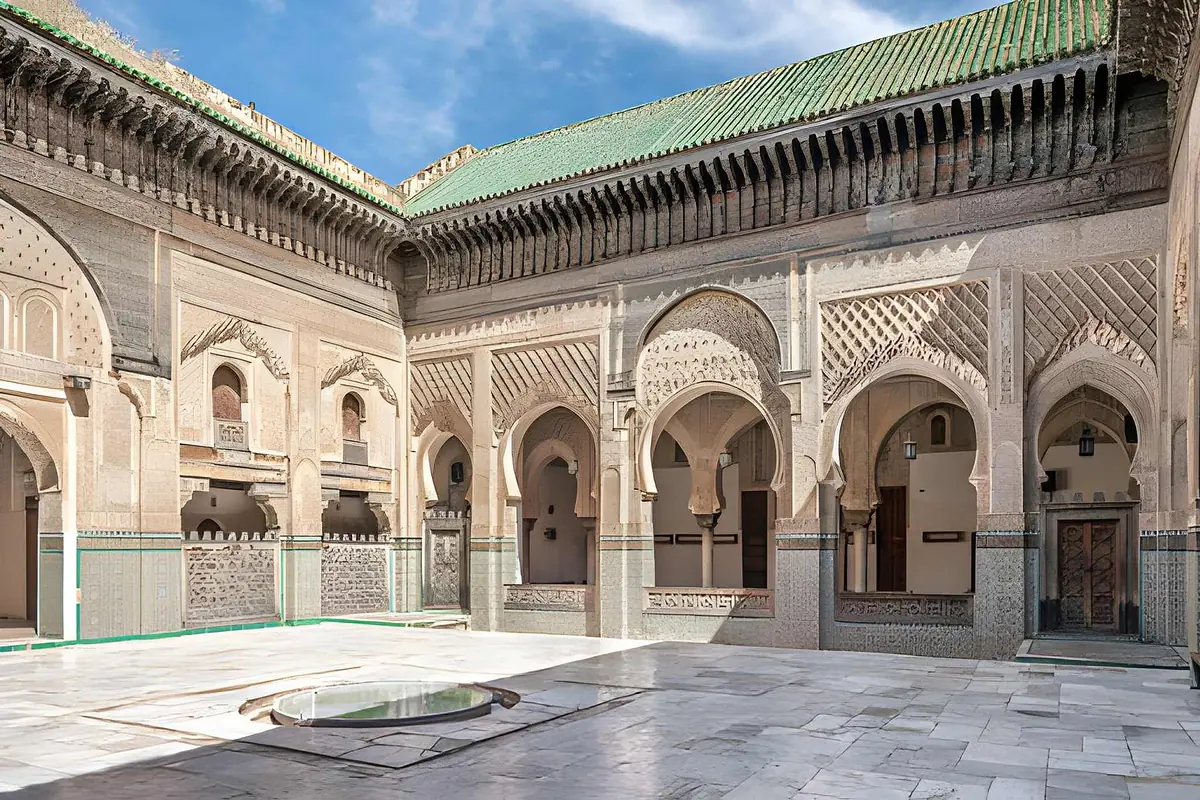
Compare two masterpieces of Marinid architecture, known for carved plaster, cedar, marble and intricate zellij. Their courtyards reveal the refinement of fourteenth-century Fassi design.
Chouara tanneries
View the traditional leather-dyeing vats from a surrounding terrace and learn how hides are prepared and coloured. Visit earlier in the day for clearer light and active workshops.
Nejjarine, Seffarine and the craft quarters
See the Nejjarine Museum in a restored caravanserai, the nearby fountain and carpentry souk, then listen to coppersmiths working around Place Seffarine.
Jnan Sbil and the Marinid viewpoints
Rest in the historic garden between Fes el-Bali and Fes el-Jdid, then continue to the Marinid Tombs or Borj Nord area for a broad sunset view across the medina.
Morocco View Travel
Suggested private tours
These existing routes connect naturally with this destination and can be customized around your dates.