Morocco destination guide
Marrakech
Medina energy, gardens and a gateway to the Atlas
Overview
Marrakech
Marrakech mixes historic lanes, courtyard architecture, gardens and contemporary neighbourhoods. It is a practical arrival or final stop and a strong base for the High Atlas, Essaouira and routes toward the Sahara.
History and cultural context
History and cultural context
Marrakech was founded by the Almoravids in the late eleventh century and quickly became a capital linking the High Atlas, the Atlantic plains and the trans-Saharan trade routes. The dynasty developed walls, mosques, markets, gardens and an ingenious water system that helped turn the Haouz plain into a major urban and agricultural centre.
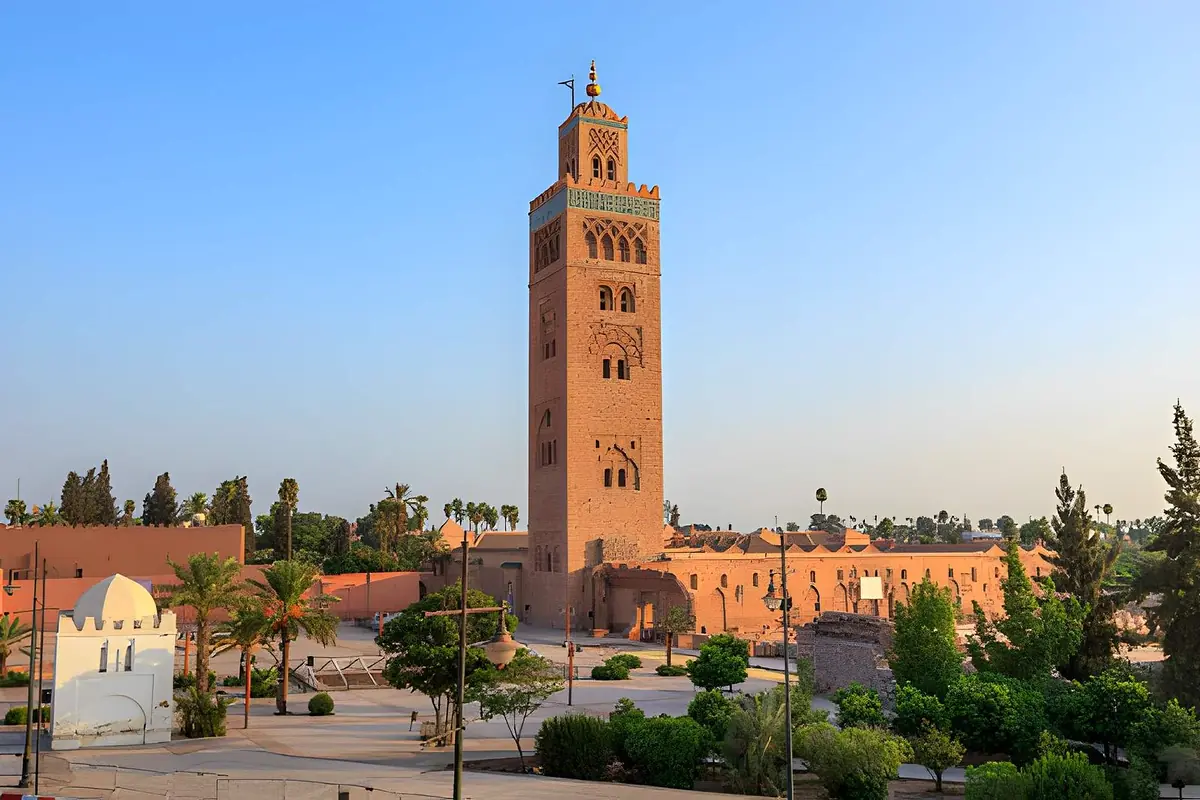
The Almohads reshaped the city in the twelfth century, leaving the Koutoubia Mosque and the monumental character of the medina. Saadian rulers added celebrated palaces and royal tombs in the sixteenth century, while later Alaouite patronage preserved Marrakech as an imperial city. Today its UNESCO-listed medina and Jemaa el-Fna remain living spaces of worship, commerce, craftsmanship, food, music and oral storytelling.
Best time to visit
Best time to visit
Spring and autumn usually offer the easiest balance for walking and day trips. Winter days can be mild, while summer sightseeing is best planned early and late.
Weather and what to pack
Weather and what to pack
Expect dry conditions, strong summer sun and cooler winter evenings. Bring sun protection, comfortable walking shoes and a light layer outside the hottest months.
Useful planning tips
Useful planning tips
- Stay near the medina if you want to explore on foot.
- Leave buffer time around Jemaa el-Fna and souk visits.
- Plan Atlas or Essaouira excursions on separate days.
Things to see and experience
Things to see and experience
These are the essential places and experiences to prioritise, with enough time to understand the history and local context behind each stop.
Jemaa el-Fna and the souks
Visit the square in late afternoon as food stalls, musicians and storytellers gather, then explore the adjoining souks by craft: metalwork, leather, spices, lamps, textiles and woodcarving.
Koutoubia Mosque and the ramparts
Walk around Marrakech’s twelfth-century landmark and its gardens, then trace sections of the red-earth walls and monumental gates that still define the historic city.
Bahia Palace and the Mellah
See carved cedar, painted ceilings, zellij courtyards and gardens at the nineteenth-century palace, then continue through the former Jewish quarter and its lively spice market.
Saadian Tombs and El Badi Palace
Pair the ornate Saadian royal necropolis with the vast ruins of El Badi Palace for a clear view of the dynasty’s sixteenth-century power and artistic ambition.
Ben Youssef Madrasa and the medina lanes
Explore the restored theological college, one of Morocco’s finest examples of Marinid-Saadian craftsmanship, and continue through the historic quarters around the Marrakech Museum.
Majorelle, Menara and city gardens
Balance the medina with Majorelle Garden and the Pierre Bergé Museum of Berber Arts, or visit Menara Garden for its historic pavilion, olive groves and Atlas views.
Morocco View Travel
Suggested private tours
These existing routes connect naturally with this destination and can be customized around your dates.