Morocco destination guide
Merzouga & Erg Chebbi
Sahara dunes, desert communities and wide horizons
Overview
Merzouga & Erg Chebbi
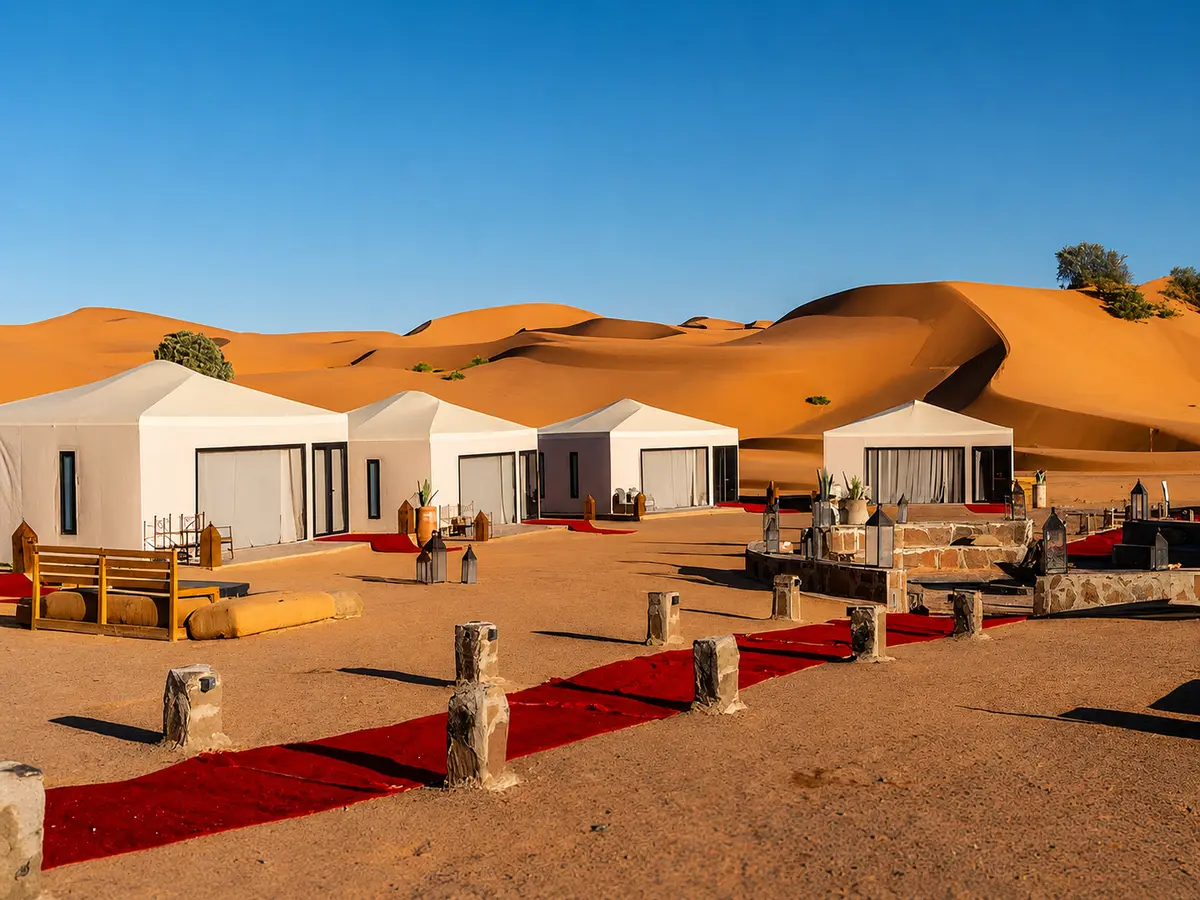
Merzouga sits beside the Erg Chebbi dunes in southeastern Morocco. A good stay balances the dunes with local culture, realistic arrival times and enough rest after the long scenic road from Marrakech, Fes or the Atlantic south.
History and cultural context
History and cultural context
Merzouga lies beside Erg Chebbi, a great field of wind-shaped dunes on the edge of the Sahara. The wider Tafilalt region has long been home to Amazigh and nomadic communities and was connected to the trans-Saharan caravan economy centred on historic Sijilmassa near present-day Rissani. Seasonal movement, oasis agriculture, livestock and trade shaped life long before modern tourism.
Merzouga itself developed as a small desert settlement and later as Morocco’s best-known gateway to Erg Chebbi. The area’s cultural story is carried by local families, desert navigation, oral traditions and the music of Khamlia’s Gnawa community. The landscape is environmentally fragile, so responsible visits should respect water limits, village life and established tracks.
Best time to visit
Best time to visit
October to April offers the most comfortable daytime temperatures. Late spring can be warm, and summer requires heat-aware timing with activities near sunrise and sunset.
Weather and what to pack
Weather and what to pack
Desert days can be sunny while nights become much cooler, especially in winter. Pack closed shoes, sun protection, water, a warm layer and protection for cameras from sand.
Useful planning tips
Useful planning tips
- Plan at least two nights for a calmer experience.
- Confirm camp comfort and transport before booking.
- Keep desert activities flexible around wind and heat.
Things to see and experience
Things to see and experience
These are the essential places and experiences to prioritise, with enough time to understand the history and local context behind each stop.
Erg Chebbi at sunrise and sunset
Walk or ride into the dunes when temperatures and light are gentle. The changing ridgelines, colours and long views are most dramatic around sunrise and sunset.
A night in the desert
Stay in a well-managed camp for dinner, music and stargazing. Choose an operator that limits waste, manages water carefully and avoids unnecessary driving across sensitive dunes.
Khamlia village and Gnawa music
Meet musicians whose traditions connect Morocco with sub-Saharan Africa, listen to a live performance and learn about the community’s history without treating the visit as a staged photo stop.
Dayet Srij seasonal lake
When rainfall fills the lake northwest of Merzouga, it can attract migratory birds including flamingos. Water and birdlife vary greatly, so confirm current conditions before planning a visit.
Rissani and the Sijilmassa area
Visit Rissani’s market, ksour and the Moulay Ali Cherif mausoleum area, then learn how nearby Sijilmassa once anchored major caravan routes between the Maghreb and West Africa.
Desert tracks, fossils and M’Fis
A guided 4×4 circuit can include hamadas, old mining settlements and fossil-rich landscapes beyond the dunes. Stay on recognised tracks and avoid collecting protected or scientifically important material.
Morocco View Travel
Suggested private tours
These existing routes connect naturally with this destination and can be customized around your dates.