
Key takeaways
- Merzouga is the gateway to the Erg Chebbi dunes, reached by a long road trip from Fes or a longer one from Marrakech over the Atlas.
- A standard Merzouga desert tour pairs a camel trek into the dunes with an overnight stay at a tented camp, built around sunset and sunrise.
- Choose a standard camp for simple comfort and shared facilities, or a luxury camp for private bathrooms, proper beds and quieter settings.
- Pack layers: desert days can feel hot while nights turn cold, so bring a warm jacket even in warmer months.
- Breaking the drive with stops in Rissani and across the Atlas passes turns a long transfer into part of the experience.
A Sahara desert tour from Merzouga centers on one thing: riding a camel into the Erg Chebbi dunes, sleeping at a desert camp, and watching the sand change color at sunset and sunrise. This guide walks through how to get to Merzouga, what a tour includes, how standard and luxury camps differ, what to pack, and how to combine the trip with nearby Rissani and the Atlas route so you arrive knowing what to expect.
Merzouga is a small village on the edge of Morocco's southeast, and it sits at roughly 699 metres (2,293 feet) above sea level, according to Mapcarta's Merzouga reference. It is the launch point most travelers use to reach the tall, wind-sculpted dunes of Erg Chebbi.
How to Reach Merzouga and the Erg Chebbi Dunes
Merzouga sits deep in the southeast, so reaching it is part of the trip. Most travelers arrive by road from Fes or Marrakech, and the drive itself crosses mountains, river valleys and open plateau before the dunes appear on the horizon.
From Fes, the road passes through the Middle Atlas and the town of Midelt and takes most of a day. From Marrakech the drive is longer, crossing two mountain passes, which is why many people split that route across two days rather than driving straight through. A private driver removes the stress of navigation and lets you stop for photos, tea and the cedar forests along the way. Morocco View Travel builds these transfers into a single customized itinerary with a local driver and a comfortable vehicle, so the long distance becomes scenery rather than a chore.
Once you reach Merzouga, the Erg Chebbi dunes are right at the edge of the village. Erg Chebbi is a large sand sea that stretches for tens of kilometres, and you can read more about its geography on its Wikipedia entry. The tallest dunes rise well above the flat plain, which is what gives the horizon its dramatic shape.
What a Sahara Desert Tour from Merzouga Includes: Camels, Camps and Dunes
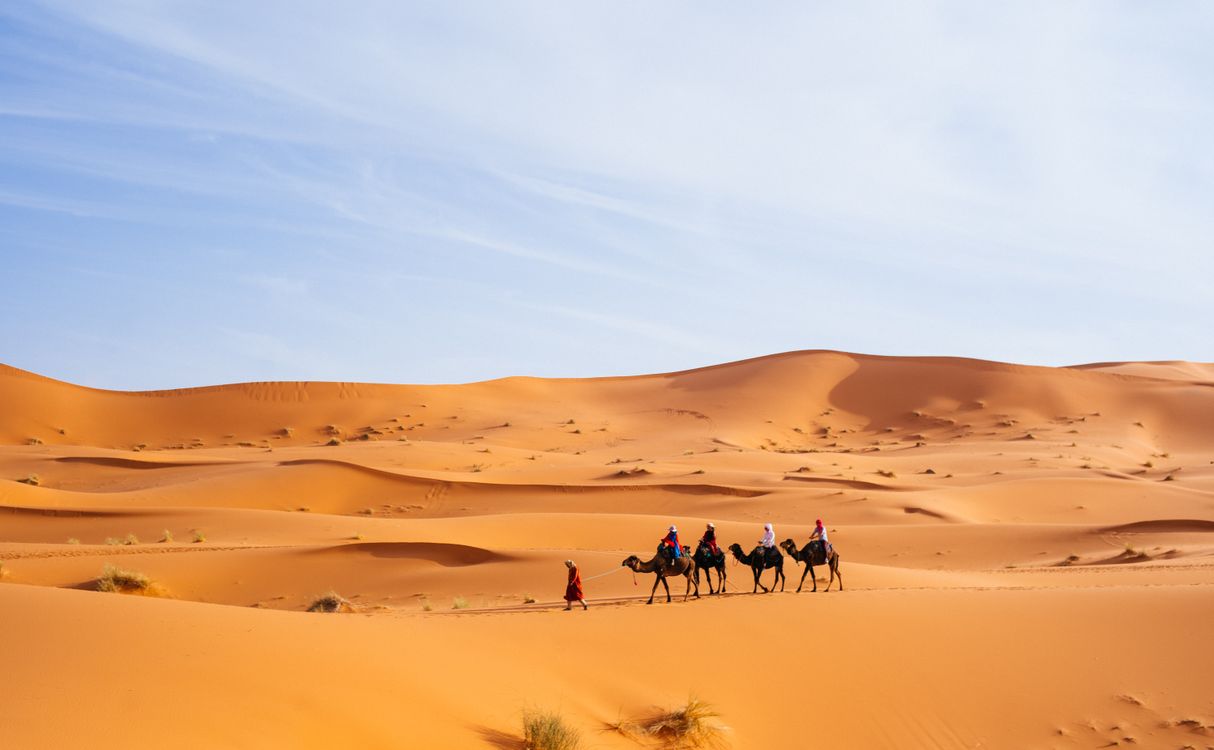
A typical Merzouga desert tour bundles three experiences: a camel trek, a night at a tented camp, and free time to climb and sit on the dunes. You usually set out in the late afternoon, so the ride lines up with the softer light and cooler air.
The camel trek is short by desert standards, often around an hour each way between the village edge and the camp. Camels walk in a line led by a guide, and the pace is slow and steady. If riding is not for you, most operators offer a 4×4 transfer across the sand instead, which gets you to the same camp without the saddle.
At the camp you are served dinner, usually a tagine and bread, often with live drumming around a fire after dark. The dunes themselves are open to explore. Walking up the nearest ridge for a clear view of the stars is one of the simplest pleasures of the night, since there is almost no light pollution this far from a city.
Sunrise and Sunset Experiences in the Sahara
The two anchor moments of any Merzouga Sahara desert tour are sunset on the evening you arrive and sunrise the next morning. Both happen from the dunes near camp, and both are worth setting an alarm for.
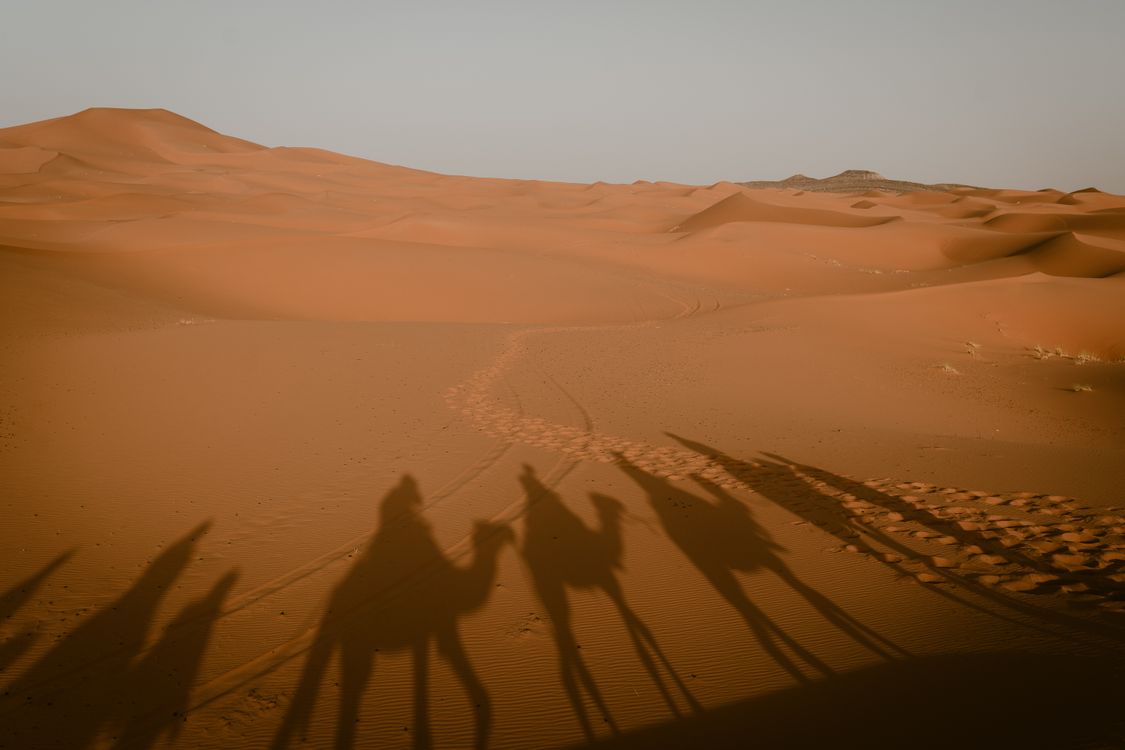
At sunset, the sand shifts from pale gold to deep orange and then a dusky rose as the sun drops. Climbing a tall dune before the light fades gives you an open view across the whole sand sea. After dark, the sky fills with stars, and in clear conditions you can often pick out the Milky Way with the naked eye.
Sunrise is quieter and colder. People wrap in blankets and climb a nearby ridge to watch the first light spread across the dunes, which turns the ripples in the sand into sharp lines of shadow. Because the temperature swings so much between night and dawn, a warm layer makes the difference between enjoying the moment and rushing back to the tent.
Choosing Between Standard and Luxury Desert Camps
Camps in Erg Chebbi fall into two broad categories, and the right choice depends on your budget and how much comfort you want after a day on the road.
A standard camp keeps things simple. You get a sturdy tent with a real bed, blankets and a shared bathroom block with toilets and, usually, basic showers. Meals are communal, and the focus is on the setting rather than the amenities. This option suits travelers who want an authentic night under canvas without paying a premium.
A luxury camp adds private en-suite bathrooms, proper furniture, thicker bedding and often a smaller number of tents for a quieter stay. Some include carpets, lounge areas and more elaborate dining. If you value privacy, a hot shower and a softer landing after a long drive, the upgrade is usually worth it.
A few practical points help when comparing camps:
- Check whether the bathroom is private or shared, since this is the biggest comfort difference.
- Ask how far the camp sits from the village, as deeper camps feel more remote but mean a longer camel ride.
- Confirm what meals and transfers are included so the quoted price is complete.
Morocco View Travel can match you to either style as part of a private itinerary, so the camp fits the rest of your trip rather than being booked in isolation.
What to Pack for a Night in the Desert
Packing for Merzouga comes down to one rule: prepare for heat and cold in the same 24 hours. Desert days can feel warm or hot, while clear nights lose heat quickly and can turn genuinely cold, especially outside the summer months.
Bring these essentials for an overnight desert stay:
- A warm jacket or fleece for the night and sunrise, even if the day was hot.
- Light, breathable clothing and long sleeves for sun cover during the day.
- A scarf or light head covering to keep sand and sun off your face.
- Closed shoes for walking, plus sandals you do not mind filling with sand.
- Sunscreen, sunglasses and a refillable water bottle.
- A small day bag, since you leave your main luggage behind at the village.
- A power bank, as there is often limited charging at camp.
Keep the overnight bag small. You only carry what you need for one night, and your larger suitcase stays with the vehicle or at a hotel in Merzouga.
Combining Merzouga With Rissani and the Atlas Route
Because the drive to Merzouga is long, the smartest itineraries treat the journey as a series of stops rather than a single transfer. Two natural additions are the town of Rissani near the dunes and the Atlas mountain passes on the way in.
Rissani sits a short drive from Merzouga and is one of the oldest market towns in the region. Its souk, held on set days each week, is a working local market rather than a tourist show, and it makes a good half-day stop for food, dates and a sense of everyday life beyond the dunes.
The route between Marrakech and Merzouga crosses the High Atlas over the Tizi n'Tichka pass, then follows the Dades and Todra gorges and the palm-lined Draa or Ziz valleys. Spreading this over two days lets you see the kasbahs, gorges and oases that most people rush past. Morocco is seeing strong tourism demand across these routes, with the country reporting record visitor numbers in recent years, as noted in reporting carried by the Adventure Travel Trade Association, so booking a private itinerary ahead keeps your preferred camps and timing available.
To turn this guide into a real plan, sketch your available days first, then decide whether you want the direct Fes approach or the slower, scenery-rich Marrakech route, and build the Merzouga overnight around a sunset arrival. From there, a local operator can lock in the camp style and stops that fit your pace.
Frequently asked questions
How many days do you need for a Sahara desert tour from Merzouga?
One overnight is enough to ride into the dunes, sleep at a camp and catch both sunset and sunrise. Two nights give you more time for the surrounding desert and a slower pace.
Is a camel trek required on a Merzouga desert tour?
No. Most camps offer a 4×4 transfer across the sand as an alternative, which suits travelers with back or knee concerns or anyone short on time.
What is the best time of year to visit Merzouga?
Spring and autumn are the most comfortable, with warm days and cool nights. Summer middays are very hot and winter nights can drop close to freezing.
Can children do a desert tour in Merzouga?
Yes. Families are common, and camps can arrange shorter camel rides or 4×4 transfers. Bring sun protection, warm layers for the night and plenty of water.